
Intranet

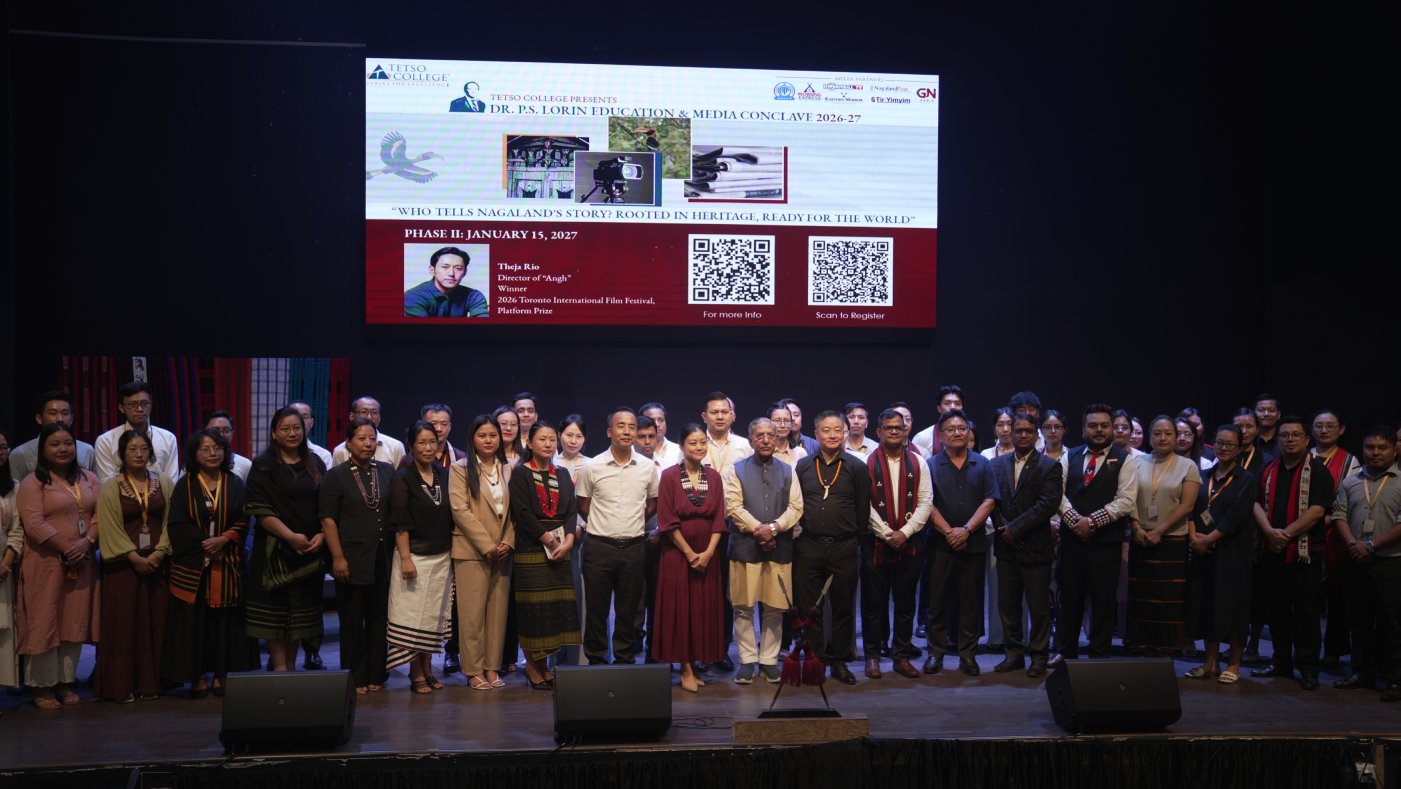
Nagaland Governor Nand Kishore Yadav has called for greater ownership of Naga narratives, stressing that the people of Nagaland must tell their own stories, preserve their cultural heritage and document their histories through their own voices. Addressing the valedictory session of Phase I of the 3rd Dr. P.S. Lorin Education & Media Conclave 2026–27 at Tetso College, Sovima Campus, Chümoukedima, on November 5, the Governor said the responsibility of documenting and communicating Nagaland’s stories must be shared by communities, educators, researchers, media practitioners and the younger generation.
Held under the theme, “Who Tells Nagaland’s Story? Rooted in Heritage, Ready for the World,” the conclave brought together media professionals, educators and students to deliberate on narrative ownership, indigenous representation and the preservation of Naga stories and cultural heritage.
Highlighting the responsibility of the media in an age where information travels across the world within seconds, Yadav stressed that accuracy must take precedence over speed and evidence over sensationalism. He underscored the importance of credibility and professional responsibility, particularly in a close-knit society like Nagaland, and encouraged media practitioners to uphold the highest standards of accuracy, integrity and accountability.
The Governor also urged students to make use of platforms such as podcasts, research papers, documentaries and social media to express and preserve indigenous stories and values. Observing that stories told today could become historical records for future generations, he encouraged young people to document their communities’ experiences responsibly.
He called for collaboration among educational institutions, communities, researchers, policymakers and media organisations, noting that colleges could encourage local research and documentation of indigenous knowledge, while media organisations could strengthen professional standards and provide greater space for local voices. Responding to the central question of the conclave, Yadav said Nagaland’s stories belonged to everyone, including elders who preserve memories and traditions, educators who help young minds understand them, researchers who document them, journalists who bring them into public discourse and young people who will carry them into the future.
He also paid tribute to the late Dr. P.S. Lorin for his vision and dedication to educational excellence in Nagaland, while commending Tetso College for its growth and contribution to society. He congratulated the college for organising the conclave and acknowledged the contributions of the organisers, panellists, media partners, resource persons and participants.
Earlier, the panel discussion on the conclave theme featured Al Ngullie, Associate Editor of HornbillTV and Samuel Beech, Sub-editor of Nagaland Post. The session was moderated by Toka V, Assistant Professor, Department of Mass Communication, Tetso College.
The discussion focused on narrative ownership, indigenous representation and the preservation of Naga stories and cultural heritage. Emphasising that Nagas must be the primary voices of their own narratives, Ngullie highlighted the distinction between narrative control and credibility, underscoring the importance of accountability, professional accreditation and self-awareness in responsible storytelling. He also reflected on how the evolving media landscape had made information dissemination more accessible, while placing greater responsibility on those sharing information to ensure its credibility.
Meanwhile, Beech highlighted the significance of indigenous songs and oral traditions as repositories of collective memory, cultural knowledge and historical experiences. He stressed the need to preserve these traditions through intergenerational transmission.
The discussion also explored the media’s role in shaping public narratives, editorial discretion in determining newsworthiness and the need to amplify authentic and socially significant stories without sensationalism or bias. The panellists expressed concern over the gradual decline of oral storytelling and the lack of documented historical archives, underscoring the urgency of preserving indigenous narratives for future generations.
The inaugural programme commenced at 11 am at Lorin Hall, with Dr. Nouzhienino Peseyie, HoD, Department of Psychology, chairing the session. The valedictory programme, held at 2 pm at Lorin Hall, was chaired by Dr. Lucy Sumi, assistant professor, Department of Computer Science, while Tetso College Principal Dr. Hewasa L. Khing delivered the welcome address.
A highlight of the programme was the launch of the book Rethinking Education: Academic Excellence for an Unwritten Future, an outcome of the Dr. P.S. Lorin Education 2025. The Governor (Lt. P.B. Acharya) Dr. T. Ao’s Scholarship was also awarded to Shyerinlo Thong, a first-semester student, and Y Theila Phom, a third-semester student, both from the Department of Education, in recognition of their achievement in sports, particularly cricket and badminton.
The Phase II of the conclave is scheduled for January 15, 2027 and will focus on visual media and global storytelling through workshops and an interactive session. Naga filmmaker Theja Rio will participate as a special guest, bringing creative and professional perspectives to discussions on filmmaking, visual storytelling and the representation of Naga experiences to global audiences.
The conclave was supported by media partners The Morung Express, HornbillTV, Eastern Mirror, Nagaland Post, Tir Yimyim, Akashvani Kohima and Gen-N Media.
Copyright © . All Rights Reserved.
Tetso College provides a variety of scholarships and need based assistance for students. This aligns to our mission and vision to empower people towards lifelong excellence and to create a positive impact in the world. we recognise excellence in sports, academics and societal impact.
